Sunday, 27 May 2012

WINE TASTING IN CALCE - LES CAVES SE REBIFFENT


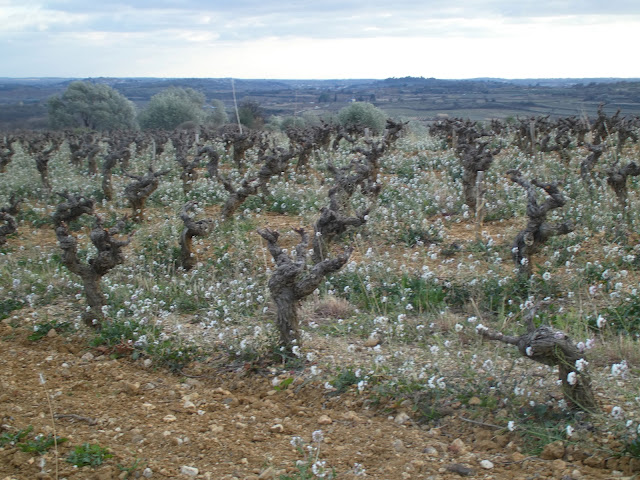
Calce is a small village close to the Agly valley, on the way to nowhere.  You take a winding narrow road out of the village of Baixas, and if you carry on through Calce, you will eventually reach  Estagel.  In short nobody takes the D18 unless they want to go to Calce, and there are plenty of reasons to go there – several very good wine growers for a start, and also a sympa village restaurant, le Presbytère   So last Saturday we set off with a firm sense of purpose.  The vignerons were hosting their annual tasting with open cellars – an event they cheekily call Les Caves Se Rebiffent – the cellars fight back.  And they had each invited a wine  grower  from another region or country, so not only were there delicious wines from the Fenouillèdes to taste, but also Sancerre, Priorat and Coteaux d’Aix-en-Provence.  The wines from Calce are either Côtes Catalanes or Côtes du Roussillon Villages, or maybe Vin de France.  I am afraid I failed to note that detail, but it is of course the name of the wine grower that counts.   And they are all organic or biodynamic. 


We began with Domaine Lafforgue, which was the new name for me, and proved to be a good discovery.  Noel Lafforgue has 22 hectares in the villages of Calce and also Corneilla.  He is the fourth generation, and took over the estate from his uncle in 2001.

2011 K-ré  Rosé  - 6.00€
From old Grenache.    Light colour.  Ripe and rounded, for easy drinking, with an elegant finish.

2011 Syrah Rosé, Côtes Catalanes – 6.00€
Deeper, brighter colour, following some skin contact.  Ripe and rounded, and more vinous, with more body and texture.  I preferred the elegance of the K-ré.

2010 Les Feches Blanc, - 11.00€ 
A blend of Grenache and Macabeo.  Feches means terraces, of which there are a lot in the vineyards of Calce.  The fermentation begins in vat and then the wine is transferred into 400 litre barrels for nine months.    Quite solidly oak y on both nose and palate, but a lot of body balanced by good acidity under the oak.  Should develop very well.

2010 Muscat Sec – 6.00€
Very perfumed, very grapey; pithy orange fruit.  A mineral note and a rich impact of flavour.   Very characterful.

2010 Vieux Porche – 6.00€  
Grenache and Syrah, élevage in vat. Ripe raisiny nose.  Rounded ripe palate.   Generous and ripe with a streak of tannin.  The warmth of Roussillon.  The wines have markedly different texture compared to the Faugères we were drinking the previous evening.

2010 Quatre Vents – 8.00€
Grenache and Syrah; the Syrah is kept in wood.  Deep colour.  Initially closed nose, with a ripe palate, and a streak of supple tannin.  Good balance and quite mouth filling. 

2009 Autres Terres – 10.00€
80% Carignan with 20% Syrah.  Good colour.  Quite a rich nose, with some oak.  Quite a sturdy palate.  The oak is beginning to integrate – the French would say fondre or melt, which seems very apt, and there is some good fruit underneath the oak.

2010 Autres Terres – 10.00€
For the 2010 vintage the wine is half and half Carignan and Grenache.  Deep colour.  Quite a dense nose.  Quite a solid ripe palate, with some oak.  Quite sturdy, with good body.  Depth and good balance. 
Later in the afternoon we returned for the vins doux:

2011 Muscat de Rivesaltes – 8.50€
Some wonderfully intense perfume.  Very ripe spicy oranges on the palate.  Ripe and smooth with the typical slightly bitter finish of Muscat.

2010 Rivesaltes, Grenat. – 10.00€
Deep colour, ripe spicy nose.  Lots of cherry spice on the palate, and lovely intensity; chocolaty notes and also a fresh cherry finish.

2004 Rivesaltes, Ambré – 15.00€
Amber colour. Quite dry nutty fruit on nose, not unlike a sherry.  Lovely nutty and elegant fruit on  the palate, with a rich finish.  Quite delicious. 


Then onto Jean-Philippe Padié:

2011 Fleur de Cailloux, Côtes Catalanes  - 14.50€
A blend of Grenache blanc, Macabeo and Grenache blanc, grown mainly on limestone.  80 year old vines.  Two thirds aged in old 300 litre barrels; one third in stainless steel, on the lees, but with no bâtonnage.  No débourbage either.  No sulphur, except for a tiny amount at bottling. 
Light colour; quite textured and mineral.  Very good acidity.  Tight knit, fresh mineral and stony.  Great potential.

2011 Ad Libitum – 9.50€
Mourvèdre on schist and Carignan on red clay.  Aged in demi-muids.   Light orange red colour.  Quite a leesy nose, with a vinous palate and an edge of acidity.  Quite intriguing but I’m not sure I really appreciated it.

2011 Calice – 9.50€
40 year old Carignan.  Quite a deep colour.  Youthful closed nose, but with a more expressive palate.  The berry fruit of Carignan, with a tannic streak.  Youthful and fresh and very expressive of the grape variety.

2010 Petit Taureau – 13.00
The name comes from a Claude Nougaro song.  And iJean-Philippe described it as a wine of extremes, with young Syrah grown on schist, and 100 year old Carignan grown on limestone.  One year in concrete and 6 months in wood.   Medium colour.  Quite a firm leathery nose.  Lovely ripe fruit, with spice on the palate, and a leathery tannin streak.  Medium weight.  Possibly slightly drying on the finish.

2007 Ciel Liquide – 21.00€
A selection of the best plots of Grenache and Carignan, ten plots altogether, with four years élevage, two years in old demi-muids, one year in vat and one year in bottle, before sale.  Jean-Philippe has 14 hectares altogether, in 40 different parcelles.  Quite a deep colour. Quite solid dense and concentrated on both nose and palate.  A youthful dense palate, with some furry tannins.  Still very young.   And poured out of a carafe that was the shape of a teapot, but made of glass!


OLIVIER PITHON was further down the street.   He has 15 hectares.

2011 Mon P’tit Pithon – 8.20€
A blend of Grenache blanc and Macabeo.  Quite soft nose.  Rounded soft easy fruit, with some ripe herbal notes and a streak of acidity.

2011 Cuvée Laïs blanc, Côtes Catalanes – 15.50€
Macabeo and Grenache Blanc, élevage in oak.  Some herbal oaky notes on the palate.  Very good structure on the palate.  Tight knit.  The oak is very well integrated with a steak of tannin.  Firm mineral stony fruit from the schist. 

2011 Mon P’tit Pithon rouge – 8.20€
A blend of Syrah and Grenache.  Some spicy fruit.   Quite ripe rounded supple palate.  Easy drinking.

2010 Cuvée Laïs rouge – 15.50€
40% each of Carignan and Grenache and 10% each of Syrah and Mourvèdre.  Aged in concrete vats.  Young colour.  Firm youthful ripe nose, and on the palate.  A touch raisiny with a dense finish.

2009 Le Pilou – 32.00
Old Carignan grown on clay and limestone.   18 months in foudres.  Attractive perfume on the nose.  Quite ripe and rounded on the palate, with supple tannins.  A ripe leathery note and good depth of flavour.  Very appealing.  A lovely example of the grape variety. 


DOMAINE  MATASSA  with Tom Lubbe, who was sporting a T shirt with the logo  Vins bus et approvés


2010 white – 24.00€
70% Grenache Gris and 30% Macabeo; 20 months in old oak.  Unfiltered and unfined.  Some fermentation notes on the nose.  Quite firm acidity on the palate.   Layered and textured with some firm minerality.  How will it age?

2010 El Sarrat, Vin de France – 20€
Pure Mourvèdre.  Quite rounded perfumed fruit.  Some spicy ripe flavours on the palate.  Hints of orange.  A rounded finish. 

2009 El Sarrat – 20€
Young colour.  Young fruit on nose.  Fresh fruit; ripe flavours balanced with a streak of acidity and some supple tannins.   Good balance.

2009 Matassa Rouge – 24€
Tom described this as ‘impure Carignan’.  It is Carignan, but there is some Grenache mixed up with it in the vineyard – in fact he said there are about ten different varieties altogether in the vineyard, and the wine is given 20 months of élevage.  Quite supple ripe fruit on nose and palate, with some smoky leathery notes on the palate.  Medium weight, but quite a ripe finish.   Very satisfying. 

And Tom had invited a newcomer to the village, to pour his wines alongside him.   So I got to meet James Eden – despite the name, he is a Frenchman, but he grew up in Birmingham.    He’s a qualified engineer, and worked in the coop in Gignac, what he called a wine factory, and learnt what not to do.    And fate brought him to Calce, where he has bought a vineyard – initially just 80 ares.   2011 was the first vintage of Clos Eden.  And he will have four hectares for the 2012 vintage.


2011 Nostromo – 13€  There are just 600 bottles of this.    You’ve got to start somewhere
Half Grenache, half Syrah.  Just bottled.    Eight months in barrique.  Minimal intervention and minimal so2  And he used a Burgundian basket press dating from 1905.  Deep colour.  Perfumed orange fruit.  Supple with a tannic streak.   Medium weight. 


2011 Perfide Albion – 10.00€
James made just 300 bottles of this.  25% each Grenache and Syrah, and 50% Carignan.  8 months in wood.   Again some orange notes on the nose, with a certain freshness and a stony finish.  Medium weight and youthful.   

And for 2013 James is promising a white and two new reds. 

As you might expect, Domaine Gauby was a very popular stand, with a dense crowd in front of it.  So we were  very grateful to be invited into the cellar for some more solid sustenance, and a calmer tasting – it was a bit like going into the royal enclosure at Ascot, which  I did once, thanks to a friend who moves in rather more elevated circles than me.   I think Lionel Gauby understood the concept when I tried to explain.

2011 Calcinaires blanc– 14.00€  - 12˚ - which is lighter in alcohol  than most.
Minimal intervention.  Bottled a month ago.  Lemony freshness on nose and palate.  Very mineral very firm acidity and delicate fruit.  Lots of potential.

2010 Vieilles vignes – 30.00€  - 12.5˚
19 months élevage.  Lovely stony mineral fruit on nose and palate.  Length, minerality and complexity. 

2009 Coume Gineste
Grenache Gris and Blanc – 13.5˚ - 2009 was a hot year.  Lionel explained that a long élevage reduces the heat.  This had 26 months élevage.  And the wine did taste very fresh.  Quite rounded with lots of nuances; fresh and complex.

2011 la Roque
Muscat with a very long maceration, so more subtle than a conventional Muscat.    Just bottled.  Orange colour from some skin maceration, and orange notes on the nose.  Very fresh acidity.   Tight knit and intriguing. 

2011 Calcinaires Rouge – 14.00
Mainly Syrah and Mourvèdre, with a little Carignan and Grenache.  Deep colour.  Lovely fruit on nose. 
Fresh fruit on the palate, balanced with acidity and tannin.  Medium weight.  Depth, length, freshness and potential.

2010 Vieilles Vignes
Bright colour.  Quite solid leathery notes with ripe fruit on the nose.  Quite firm fruit on the palate.  Some well integrated tannins.  Fresh fruit, with a youthful edge.   Nice depth.  Long finish.

2010 Muntada.  A blend of Carignan and Grenache,  grown on schist, marnes and limestone.  Solid and leathery on nose.  Good concentration on the palate, but not heavy.  An orange note.  Quite firm tannins.  Very youthful and masses of potential. 


And last but not least was the Château de Calce, the village coop with 40 members running 220 hectares.  We tasted with Valerie Balmigere, who explained that Calce has one of the smaller coops of the region.    It was founded in 1932.

2011 Côtes du Roussillon blanc – 4.20
A blend of Macabeo and Grenache.  Light and fresh, with a touch of Muscat.

2011 Calcidoine, Côtes du Roussillon blanc  -15.00€
Aged in oak.  Old vines, Grenache and Macabeo. Quite solidy oak – too much for me. 

2011 Muscat Sec  - 4.00€
Quite fresh, pithy orange and acidity, a fresh finish.

2011 Côtes du Roussillon rosé – 4.20€
Light nose, light fresh fruit and nice acidity.  Quite delicate

2006 Côtes du Roussillon red. – 3.95€
Quite rounded and easy, but no depth. 

2008 Côtes du Roussillon Villages - 5.00 €
Quite rounded, leathery raisiny fruit. Quite concentrated. 


Calcidoine, Cotes du Roussillon Villages -  15.00€
Élevage in vat.  Solid rounded; quite dense and raisiny, with some oak. 


And then came the Vin Doux:

2010 Muscat de Rivesaltes – 7.00€
Ripe concentrated, spicy Muscat fruit.  Nice acidity balance

Ambré Hors d’Age – 12.00€
Grenache blanc, Gris and Macabeo.  2 years in wood, in 10 year old barrels
Amber golden colour.  Quite soft nose; some acidity, biscuity fruit. 

2006 Tuilé – 5.00€
Tuilé requires more ageing than Grenat.  Light red; quite ripe rounded berry fruit.  Medium weight.  A tannic streak.  Quite fresh, with cherry and chocolaty notes.  Quite delicious.    A lovely finish to the day. 


There were some delicious  wines too, to be enjoyed from the visiting domaines.  Domaine Alphonse Mellot, chez Gauby,  was pouring a 2007 Sancerre les Romains en magnum, with some beautifully mature Sauvignon fruit.  Lovely minerality and acidity.

Peter Fischer from Château Revelette in the Coteaux d’Aix-en-Provence was the guest of Jean-Philippe Padié.  I  prefer Peter’s unoaked entry level white wine to his Grand Vin made from Chardonnay. 
Pur blanc, PUR standing for Produit uniquement des raisins !  A blend of 90% Ugni Blanc with some Sauvignon was delicate fresh and understated with a nice balance.

Pur red is 100% Grenache, with rounded ripe fruit, spicy fruits confits on both  nose and palate, with a touch of acidity on the finish.    And his Château de Revelette pink was delicate and fresh, with an elegant finish. 

2010 Grand Rouge is a blend of 40% Syrah, and Cabernet Sauvignon with 15% Grenache and 5% Carignan.  Deep colour.  Rounded rich and concentrated with ripe cassis and spice on the palate.  A tannin streak and a firm finish.

I also enjoyed Pierre Michelland’s wines from Domaine de la Realtière, also in the Coteaux d’Aix.
2011 Blanc Publique, from Ugni blanc had a delicate nose, with a touch of fruit.  Nicely understated.

Pastel rosé -  a light colour and touch of raspberry on the nose.  Rounded delicate fruit on the palate.  A blend of Grenache, Cinsaut and Cabernet Sauvignon. 

2011 Cul-Sec – 90% Carignan with some Syrah.  Deep colour  frim young fruit.  Still quite tannin and a bit adolescent – to develop.

2008 Juliette   A blend of Carignan, Syrah, Grenache and Cabernet Sauvignon.  Quite deep colour.  Quite a fleshy nose, with a ripe youthful palate and a touch of cassis. 

The Château de Calce had invited Domaine J. Laurens from  Limoux – see an earlier posting – and  how lovely to have a refreshing glass of bubbles after some serious red wines.  Tom Lubbe’s guest was a Priorat, Terroir al Limit and Chateau Lehoul from the Graves was in Noel Lafforgue’s cellar.

Altogether a great day out.  I’ll be back next year!


Monday, 21 May 2012

DOMAINE DE BARON ARQUES


I had heard that Philippine de Rothschild had bought vineyards in Limoux, and had even tasted a couple of vintages a few years ago. And then suddenly I had a spare morning in Limoux and the opportunity for a cellar visit with Vincent Montigaud, who runs the Domaine de Baron Arques. He moved to Limoux from Bordeaux in 2001, so that he has played a significant part in the development of the estate.

Vincent explained that Philippine had bought the property with her two sons back in 1998 – the estate had originally been known as Domaine Lambert and comprises 47 hectares near the village of St Polycarpe. The domaine dates back to the 17th century and there is a château that was built at the end of the 19th century, in what Vincent called le style Biarritz. The vineyards had been much neglected, so many were pulled up and replanted. I was intrigued by the Rothschild interest in Limoux. Vincent explained that their am was to make a great red wine, like Opus I in California or Almaviva in Chile. And why Limoux? They wanted to play a part in the redémarrage of the Languedoc; there is some great terroir in the Languedoc, which needs to be mis en valeur. Limoux was not known for its reds; that appellation was only created in 2003, and yet the potential is enormous, situated as it is on the climatic crossroads of the Atlantic and the Pyrenees, with the advantage of relatively high altitudes and cool vineyards. Nearby Malepère and Cabardès produce convincing wines from both Mediterranean and Bordeaux varieties, which distinguish them from the rest of the Languedoc, so why not Limoux too? Initially they formed a company with the Limoux Coop, le Sieur d’Arques, to give themselves time to learn about Limoux, and in 2003 it was time to go it alone, so the connection was terminated as the brand name Baron Arques became Domaine de Baron Arques, with a first vintage in 2003.


Vincent took us on a tour of the vineyards – there are some beautiful slopes, especially in the spring sunshine. The altitude is between 250 and 350 metres, and they are at the junction of three terroirs, Mediterranean, Antan and Haute Vallée. He explained how they pulled up Mauzac, Carignan, Chardonnay and Merlot, while keeping Syrah and some Merlot, and replanted more Merlot, as well as Cabernet Franc, Cabernet Sauvignon, Syrah, Malbec and Grenache, in other words the principal varieties of the appellation.  the oldest  vines were planted in 1974.   Usually their blend is approximately 50% Merlot, with 17% each of Cabernet Franc and Syrah, 11% Malbec, 3% Cabernet Sauvignon and 2 % Grenache, but of course there are vintage variations. Initially they made only red wine, but since 2009 they have produced a pure Chardonnay. They grafted Chardonnay on to Grenache, in the vineyards where it is too cool for Grenache, either by T-budding or a technique using two buds called en fente. The first seven years were years of restructuration, with wine that was sold off as vin de cépage, as they got to understand their vineyards.

There is some detailed work in the vineyard. The have planted some high density vineyards, with 7500 plants per hectare in deeper soil. They practice lutte raisonnée and have a weather station on the estate. Most of the pruning is simple or double guyot, with some long baguettes. They practice ebourgeonnage in order to spread out the bunches. There is effeuillage at the end of June, on the shady side of the vines, and then on the sunny side, just before the harvest, to provide better aeration and avoid the development of botrytis. And they will do a green harvest if necessary.


Vincent described the work as adapting the savoir faire of Mouton Rothschild to the character of the Languedoc. There are some bordelais practices that might work in the Languedoc, and others that do not. In Bordeaux there has been a trend towards higher vines, but that is unnecessary in the Languedoc. They leave grass between every other row and switch the rows every three or four years. There is an attention to detail in the cellar too, with a table de trie, destemming of the grapes and work by gravity. They are guided by tasting, assessing the ripeness of tannins, skins and pips, as they are at Mouton. The cellar is neat, with thermo-regulated stainless steel vats of several different sizes, as well as concrete vats. Vincent remembered the earth floor and the old foudres of the previous owners.

The harvest usually takes place between about 25th September and 25th October. They do a pre-fermentation cold maceration for 24 – 48 hours. The alcoholic fermentation does not reach too high a temperature, a maximum of 29˚ - 30˚C and then they drop the temperature down to 25 - 26˚C.   They don’t want to extract excessive tannins, so the maceration time depends on the grape variety, and is determined by tasting. It is usually longer,  two to three weeks,  for Merlot, Cabernet Franc and Cabernet Sauvignon, and shorter, about ten days, for Syrah, Grenache and Malbec. Their objective is to preserve the fruit. The malo usually takes place in tank, though they are experimenting with malo in barrel. They begin blending in mid-December and finalise the blend in early January before putting the wine into barriques, for six months for the second wine, La Capitelle and 12 months for the Grand Vin. They use 25% new wood for the Grand Vin, and one year old barrels for the second wine. There is some serious selection in the cellar. They only bottle two thirds of their production, either as the Grand Vin or as Capitelle, with the bulk of the wine going into a vin de cépages range that is marketed from Bordeaux.


And now for some tasting – impeccably organised, with bordelais efficiency, tasting sheet and a glass for each wine - In the main salon of the chateau.

2008 la Capitelle du Domaine Baron Arques
Good young colour. Elegant oak on nose and palate. Some delicate vanilla notes. Some supple tannins and some dry spicy fruit on the palate. The nose was more bordelais, with some elegant Mediterranean spice on the palate. Capitelle has more Syrah than the Grand Vin, so seems more Mediterranean. Nice balance. A late harvest, from 6th – 29th October, following quite a cool summer.

2009 La Capitelle – 16€
Deeper young colour. More intense, more cassis on the nose. Quite firm peppery fruit on the palate. Youthful and tight knit initially, developing quite rounded spicy fruit. Good length and balance. This vintage has less Merlot and more Syrah than the 2008 and seemed more flattering on the palate.

And then onto a mini vertical of the Grand Vin

2003: Quite a deep young colour, with a little development. Quite a warm nose, some vegetal notes and a touch of chocolate. Quite rounded, raisiny and ripe on the palate. Almost a touch port-like. This was the year of the heat wave, and the wine has less acidity than some vintages. There were some leathery tannins, with an animal note on the palate, which was quite evolved with a certain warmth. Quite a long finish. Harvest from 15th September to 31st October. 14.5˚

2006: Picking started on 26th September. No Grenache in the blend and they are increasing the amount of Cabernet Franc, finding that it performs well, on limestone, and also appreciates the big difference between day and night time temperatures. Medium colour. Quite a firm nose; quite sturdy. Some firm cedary notes on the palate, as well as a touch of pepper. Quite firm tannins. Needs more time in bottle. The summer was hot with temperatures reaching 35˚C at the end of July.

2007: This was the vintage with the highest proportion of Cabernet Franc. Medium young colour. Quite an elegant cassis nose. More supple tannins. Good structure and fruit. Elegant, long and youthful. The harvest began on 2nd October. The 2007 shows a very definite leap in quality from 2006.

2008: No Grenache. Harvest began on 6th October. Medium young colour. Quite a rounded nose, not especially intense. Youthful cedary notes. Tighter more austere than 2007. Elegant tannins, and a certain freshness on the palate. Quite stylish with very good potential. Similar to 2007, but more restrained.

2009: - 30€
The highest percentage - 61%- of Merlot, and more Cabernet Sauvignon - 13% - than usual, as the vines get older. . Harvest began on 25th September. Deep young colour. Quite a ripe rounded nose and palate. Elegant with a very good balance of tannin and fruit. Silky tannins. Harmonious finish. And I was surprised to find that it was a heady 15˚. You certainly would not have thought so from the taste.

We then had a discussion about barrels; they use some of the same coopers as for Mouton, but for Limoux ask for medium chauffe, whereas for Mouton they want a higher chauffe. And here they rack less, every six months, as opposed to every three months, to add more gras to Limoux.


2010 Chardonnay – 32€.
Their second vintage. The Chardonnay is fermented and aged in wood for eight to nine months. The barrels are half new and half one year old. Just over half - 54% - is pressed immediately, and the rest given twelve hours of skin contact. 24% underwent a malo-lactic fermentation. Quite a rich leesy nose with some oak, and on the palate with good acidity and satisfying texture. A certain weight from the malo. The oak is well integrated and the palate rich and rounded. Vincent said that for 2011 they gave it less malo in order to increase the tension in the wine.

As for projects for the future; they want to continue to develop the Chardonnay, and also have a plan for a large barrel cellar – currently their barrels are scattered in various small cellars. But they are not tempted by sparkling wine, nor by Pinot Noir. I have to admit that the wines were a revelation. I have always been rather critical of the fact that Pinot Noir is not included in the appellation of Limoux – Limoux is after all one of the coolest parts of the Languedoc – but certainly the wines of Baron Arques showed that the climate also suits the Bordelais varieties.

Saturday, 19 May 2012

GIROFLET - A postscript to Domaine Begude


James Kinglake’s winemaker is Laurent Girault, who has his own small vineyard in Abeilhan, Domaine de Péras, so James very generously included Laurent’s wines in our tasting. Laurent has also worked further afield, spending a vintage at Rippon Vineyards on Lake Wanaka in Central Otago. I was immediately intrigued by his wine. He explained that he planted his white vineyard in 2004, with a high density, on the limestone and clay plateau between the villages of Abeilhan and Alignan-du-Vent. He has just 63 ares of white grapes – Chardonnay, Roussanne, Viognier – Petite Arvine –‘because I like it’, Chenin Blanc and Petit Manseng. 7000 vines in total. Giroflet is the name of a local flower.

The 2010 vintage was quite golden in colour; it was kept in vat and bottled in May 2011. There were herbal notes, and nutty nuances on the palate. It was all very intriguing and unexpected. I don’t think my tasting notes really do justice to the complexity.    Just 2000 bottles.

And the red wine comes from vines planted in 1925, sixteen different varieties, all mixed up. The most important are Grenache Noir, Cinsaut, Syrah and Counoise, but there is also Aramon, Carignan, Grand Noir de la Calmette, with some white interlopers, Muscat and Macabeo. Laurent couldn’t remember them all and explained that he had replaced missing vines by sélection massale, taking his own cuttings. In 2008 he made the wine from all 16 varieties, but for 2009, he selected the best for his wine. The élevage is half in vat and half in barrel for twelve months, followed by a further twelve months in vat, with minimum use of sulphur. One hectare of vines has given him just 1500 bottles. We tasted the 2008. Quite a firm nose, with fresh youthful cherry fruit. And more spicy cherries on the palate. A lovely balance. Some tannin; fresh and youthful; delicious liquorice perfume. And wonderfully original and unexpected. Just another example of the never-ending surprises of the Languedoc.

Tuesday, 15 May 2012

DOMAINE BEGUDE


Back to Limoux.   As it happened, the next estate that I went to visit in Limoux also concentrates on still wines, though James Kinglake admits that he is beginning to experiment with a sparkling Limoux. He and his wife Catherine bought Bertie Eden’s old estate of Begude in 2004 and since then have concentrated on producing still wines for an international market, with some considerable success.

And what brought him to Limoux? He looked at about 40 estates between there and Italy. Provence appealed, but then he realised he would be too dependent on the tourist trade. He loves Burgundy, but he certainly couldn’t afford a vineyard in Burgundy, and the terroir in Limoux is great for the grape varieties of Burgundy.  So he bought 22 hectares, pulled six and planted seven, and now has 29 hectares in production. He concentrates on Chardonnay, but has also played with Sauvignon and Chenin blanc, and made his first vintage of Pinot Noir in 2010, having in 2006, planted both Burgundian and champagne clones.

Domaine Begude is a stunning spot outside the village of Sépie just north of Limoux. You travel hopefully along a winding road, which apparently forms the boundary between Malepère and Limoux. It is a windy spot, with undulating vineyards at about 300 metres altitude. James has planted some Viognier in the warmest plot at 260 metres, and he has also planted some Gewurztraminer, with a first vintage anticipated for this year. He finds that he is making less and less appellation wine. You get more sunshine here than in Limoux itself as it is in the warmer Mediterranean terroir of Limoux. The altitude however compensates for the warmth, giving you fruit and acidity as well. James practices organic viticulture and he has the genial Australian winemaker, Richard Osborne as his consultant.  He also produced the interesting figures that Limoux has 24 independent wine growers, as well as the enormous Sieur d’Arques coop and the smaller Anne de Joyeuse coop.  The two coops account for a massive 90% of the production of Limoux.

We did a bit of barrel tasting, a couple of Chardonnay and some Pinot, and then adjourned to a rather smart tasting room. A caveat however, James may have a tasting caveau, but you do have to make an appointment first if you would like to come and taste – the number is 06 86 05 73 74  - as he does not welcome casual callers. But once you’ve made the appointment, you can be sure of a warm welcome.

2011 Le Bel Ange Chardonnay, with 14% unoaked Chenin. Pays d’Oc. 5.95€
With 14% of a second variety you can declare a monocépage; with 15% you must put both varieties on the label. Ripe rounded fruit, for easy drinking.

2011 Sauvignon Blanc - 7.18€
Quite fresh pithy nose. Some minerality. Good fruit balanced with acidity and some weight. Some skin contact. Dry finish.

2011 Pinot rosé Pays d’Oc – 7.18€
Picked at the end of August and pressed immediately. Pale pink. Quite dry on the nose, but with a riper, fuller palate. Quite broad with some strawberry fruit.

2011 L’Exotique – 8.37€
James has grafted a plot of Chenin Blanc, with Grűner Veltliner. This was a revelation. The cuttings came from a friend in Austria, Marcus Huber in Traisendal near Krems. He has blended it with 20% Chardonnay and the results of very intriguing. There is a herbal note and a definite hint of Grűner Veltliner, with some nice weight and texture and a certain pithy fruit.

He has also tried Riesling, which didn’t ripen, and has high hopes for his hectare of Gewurztraminer, aiming eventually to make a range of three Exotiques – Grűner Veltliner, Viognier and Gewurztraminer.

And then we went on to Chardonnay:

Terroir 11300 – which is the postal code for Limoux. Pays d’Oc – 7.18€
It was AC Limoux but for that you have to handpick and all the wine must be fermented in barrel. This instead is only partially oaked - 25 – 30% - in 600 litre wood, and is machine harvested at night. James finds that 600 litre barrels respect the fruit, so that the wine is not overoaked.  Quite ripe and rounded, buttery, quite textured. James said that he was looking for the freshness you would want for an aperitif, but with sufficient body to go with food. I thought he had succeeded. A nice long finish,

2008 L’Etoile - 10.76€
The top Chardonnay cuvee from two particular plots, Le Puits and le Cerisier. The first is more elegant and mineral, and the second fruitier. A selection of fruit and a selection of barrels. This in contrast is all oaked, and hand-picked. Quite a deep colour. Ripe fleshy fruit. A certain lactic quality. Ripe and oaky.

And then we went onto Pinot Noir:
2011 Pinot Noir – 8.37€
Picked a little riper than the 2010. No oak. Medium colour. Ripe spice on nose and palate, with a touch of tannin, enough to balance the lovely red fruit. Very accessible and youthful.

2010 Esprit de Begude – just 280 bottles from one barrel.
Quite a serious nose. A bit of oak on the palate. Quite substantial, smoky fruit. Firm structured and texture and very youthful. James decided to experiment in 2011, with some handpicking and pigeage. And the 2011 tasted from barrel promised well too.

And then we concluded with la Folie de Begude, a Blanc de Blancs from Chardonnay alone. Not an appellation, as a monocépage is not allowed for sparkling Limoux, so a Vin Mousseux de Qualité. James makes the vin clair and then sends it away to be turned into sparkling wine. It was rounded with soft easy fruit. An interesting figure: it costs 4€ a bottle to turn a still wine into sparkling wine.

And suddenly it was the moment for an aperitif, before we all headed further down the track to our friends at Rives Blanques for dinner.


Sunday, 13 May 2012

STONE, VINE AND SUN and the Languedoc

Another deviation from Limoux.   The Winchester based wine merchants, Stone Vine and Sun, have always made the Languedoc a bit of a speciality. Indeed their name conjures up the key ingredients of the Languedoc, stony vineyards in warm sunshine. So I was delighted to have the opportunity to taste some of their offerings from the Languedoc at a recent press tasting at the Maison du Languedoc. They showed 34 wines altogether. What follows are some highlights – and the prices are their retail prices.

Beginning with white wines:

2011 Creyssels, Picpoul de Pinet - £8.25
A new name for me, and an estate based in Mèze. A firm salty nose, which good Picpoul should have, with a pithy salty palate, with a good balance of acidity. The only thing that was missing was an oyster.

2010 Château La Grave, Minervois, Expression - £7.95
Possibly a hint of oak, with nicely rounded textured fruit on the palate. Good balance of weight and acidity, and an understated fresh finish.

2010 Domaine la Croix Belle, le Champ des Lys, Côtes de Thongue - £8.95
A blend of Grenache Blanc and Viognier. Peachy lemony notes on the nose. Quite rounded and ripe on the palate, with some peachy fruit. Medium weight and nicely perfumed.

2011 Domaine du Météore, Faugères blanc, les Léonides - £10.50
A blend of Marsanne and Roussanne. Light colour and quite a delicate nose. Some white blossom on the palate, but quite delicate. Still very young and understated. Should fill out with some age

2010 Domaine Belle Pierres, Coteaux du Languedoc, Clauzes de Jo - £11.75
A blend of Roussanne, Grenache Blanc and Viognier. Quite rounded nose, with some peachy hints on the palate. Quite rounded with some body and intriguing layers of flavour, with a dry finish.

And now onto a couple of rosés:

2011 Château la Grave, Minervois Rosé, Expression - £7.95
Light colour, with a touch of strawberry on the nose. Quite rounded, ripe fruit on the palate. Quite fresh and mouth filling, balanced with good acidity. A food rosé.

2011 Domaine du Météore, Faugères Rosé, la Tour Fabienne - £8.75
Light orange pink colour. A light, dry nose, with some herbal hints. And the palate, more notes of the garrigues. Good body with a dry finish.

And then some reds:

2010 Domaine la Croix Belle, Caringole Rouge, Côtes de Thongue - £7.95
A blend of Merlot, Syrah and Carignan. Quite a firm dry nose, and on the palate, rounded, ripe fruit. Very easy drinking, simple pleasure and sunshine in a glass, with a ripe finish.

2009 Terres Falmet, Cinsaut, Vin de France - £7.75
Medium colour. Dry cherry fruit on the nose, with a touch of spice. A fresh spicy palate, with quite a firm finish. Medium weight. Lovely example of an underrated grape variety.

2009 Domaine des Trinités, Faugères, le Portail - £9.25
Medium colour – quite rounded ripe fruit. Rounded ripe fruit on the nose with lovely ripe spice on the palate. Easy and rounded with good depth. Classic Faugères at its sunniest.

2009 Domaine Belles Pierres, Coteaux du Languedoc, les Clauzes de Jo – £11.25
Medium colour. Quite firm leathery fruit on the nose and palate. Quite a dense solid palate, with ripe leathery flavours. Still very youthful.

2009 Domaine Fontanel, Côtes du Roussillon - £9.95
Medium colour. Ripe, rounded and warm, and almost a touch raisiny on both nose and palate. Good depth of flavour, with ripe fruit and a firm backbone. Nicely balanced, with the satisfying warmth of Roussillon.

2008 Domaine du Météore, Faugères, les Orionides - £11.75
 Deep young colour. Quite firm dry leathery notes on the nose, and on the palate good firm leathery fruit, with a warm note on the finish. They must have missed the hail that affected so many estates in Faugères in 2008.

2010 Domaine du Grand Arc, Corbières, En Sol Majeure - £14.50
Quite a deep colour. Solid ripe leathery nose. Ripe and rounded on the palate, with a firm tannic streak and some leathery notes. Good depth of flavour. Nicely mouth-filling and satisfying.

And now a couple of vins doux to finish with:

1999 Domaine Fontanel, Rivesaltes Ambré - £14.95
Light amber red colour. Delicious liquid walnuts on nose and palate, with a hint of bitter orange. Quite ripe. Some honey and unctuously smooth fruit with a bite on the finish. Lovely length. Rivesaltes at its most delicious. These wines are grossly underrated.

2006 Domaine du Traginer, Banyuls, Rimage - £17.95
Medium red colour. Spicy red fruit on the nose, and more liquorice on the palate, with a tannic streak. Youthful and ripe, with a slightly spirity finish.

www.stonevine.co.uk

Wednesday, 9 May 2012

ROUSSILLON AT THE BIG FORTIFIED TASTING

I’ve not finished with Limoux, but here’s small deviation into Roussillon. The Big Fortified Tasting or the b.f.t. as it is commonly called is now in its third year and took place last week in the Glaziers Hall. What a tasting. I had missed the previous two years. There were fortified wines from all over the place, not just the obvious Port, Sherry and Madeira, but also Marsala, fabulous liqueur Muscat and Topaque from Australia, Moscatel de Setubal, and offerings from South Africa and California, and of course Languedoc-Roussillon. I must admit that I was expecting more from the Languedoc, but what there was, was delicious. I am of course already converted to these wines, ever since I first went to Rivesaltes twenty years or so ago, when I was researching French Country Wines.

Wine importers, Richards Walford, were responsible for the wines from Roussillon, as follows:

Domaine de la Rectorie 2010 Banyuls, Cuvée Parcé Frères Deep ruby colour. Quite an intense spicy nose, with some red fruit. More intensity on the palate. Lovely rich spices, with well-integrated alcohol and an underlying sweetness. A tannic streak which will disappear with age. Still very youthful and will definitely benefit from some bottle age.

2008 Banyuls, Cuvée Léon Parcé This comes from slightly different vineyards, and is riper and sweeter, and even more intense. Great concentration of ripe fruit, with spicy cassis and cherries, and absolutely delicious.


Les Vignerons de Maury – the village coop of Maury which works well for its appellation and retains a stock of old wines. The individual casks are numbered, and only about a third of the wine is taken from the cask for bottling. And the cask is then topped up and left to age and develop these wonderful, rancio flavours.

Maury Solera 1928 – Amber red colour. Lovely nutty nose. Liquid walnuts. Elegantly nutty fruit on the palate, with very good balancing acidity. Makes it more Madeira than Port-like. Great intensity of sweetness and richness. Wonderfully original.

Domaine de Rancy, in the village of Latour de France.  
1993 Rivesaltes  Amber colour; elegantly dry nutty nose. And on the palate great intensity, with walnut fruit and balancing acidity. And considerable depth and length. And a long dry nutty finish. Delicious! I could drink these instead of an old tawny port any day, though I did go on to enjoy some beautiful mature 20 year old tawnies.

Thursday, 3 May 2012

CHATEAU D'ANTUGNAC

I had another reason to visit Antugnac, namely the wines of the Château d’Antugnac. Various people had mentioned them to me and I had tasted them some years ago at Vinisud. So it was definitely the moment for further investigation. The property was bought by two Burgundians, Christian Collovray and Jean-Luc Terrier, in 1997 and these days it is David Serrodes who runs the estate and makes the wine.
First he took us for a drive through the vineyards. This is Limoux countryside at its best, the cooler landscape of the Haute Vallée de l’Aude, with vines at 330 metres, going as high as 500 metres. They now have 93 hectares, which makes them the largest private cellar in Limoux. The oldest vines go back to the late 1960s, a vineyard of Chardonnay. Cabernet and Pinot Noir followed soon afterwards. Essentially the soil is clay and limestone; clay gives you fruit, and clay, what David called droiture. He comes from Nimes and studied in Montpellier, but has taken on the Burgundian attitudes of the owners. They take time over the élevage of the wines; you mustn’t be in a hurry. Some of the vines are planted very close together, with 10,000 vines; others have wider rows to accommodate a farm standard tractor. Chardonnay is their principal grape variety, with Merlot, Pinot Noir, Sauvignon and Cabernet Franc. And they are converting to organic viticulture.
The cellars are spacious and well run. There is a sorting table, and as they have lots of different plots, there are stainless vats of different sizes, and also some large cement vats. The barrel cellar is neat, with that evocative aroma. Blind-folded you could only be in a wine cellar.
And then we tasted; David explained that that for vin de pays they must use the term domaine, whereas for an appellation château is permitted.
2011 Les Grand Penchants, Haute Vallée de l’Aude, Chardonnay – 7.40€
This was fermented in two horizontal tanks, 1.40 metres high by 3 metres wide, to facilitate bâtonnage, and bottled at the end of March. All the wine did its malo. Light golden colour; lightly buttery nose; a touch musqué – David has explained that they had used some of the Chardonnay musqué clones from the Maconnais, which although they are definitely Chardonnay, do have just a hint of a Muscat aroma. There was a note of honey too, with some fresh acidity balancing the ripeness on the palate. No oak and a nice long finish.
2010 Château d’Antugnac, Terres Amoureuses. AC Limoux – 10€
85% Chardonnay with 15% Mauzac. Fermented and aged in oak. 10% new. Blended before bottling, as there is a month’s difference in the ripening time of Chardonnay and Mauzac, between 15th September and 15th October.
Light golden; light leesy nose. Quite rich and buttery. Quite broad with a hint of acidity. Quite textured. There was something quite Burgundian about it, even though as David observed ‘we don’t have the minerality of the Maconnais’.

2010 Château d’Antugnac, Chardonnay, las Gravas, Limoux - 15€
25-30% new wood, Burgundian pièces of 228 litres rather than bordelais barriques. They have experimented with some larger tonneaux of 300 litres. The appellation decree originally specified a maximum of 300 litres, but no longer.
Very golden colour. Quite firm structured nose; tight knit and leesy. Good acidity on the palate. More mineral and more oak, but integrated oak, with a rich leesy malo-lactic note. Good matière. A rich textured mouthful of wine; well-made but a bit too heavy for my taste buds, given that my favourite Chardonnay is Chablis.

And now for some Pinot Noir. David explained that they determine the harvest date according to the taste and visual appearance of the grapes. The alcohol level is around 12.5˚ - 13˚ and above all they want to show each variety at its best.

2011 Domaine d’Antugnac, Pinot Noir Haute Vallée de l’Aude – 6.70€
40- 50% élevage in wood, 10% new, with some punching down or pigeage. Medium colour. Fresh nose with raspberry fruit and a touch of oak. Quite dry fruit; elegant raspberries with a touch of oak. The vines are still quite young. And above all they want is drinkability, and I think they have certainly achieved that.
2010 Domaine d’Antugnac, Côté Pierre Lys, IGP Haute Vallée de l’Aude. – 10.00€
10 months of élevage in pièces for all the wine.
Medium colour. Quite rounded, quite closed nose with a touch of oak. Quite ripe silky tannins on the palate, with a certain amount of body. Good depth and length. Some acidity and tannin, balanced with some fresh raspberry fruit. David observed that it was difficult to control acidity and tannin, but I think he managed pretty well with this wine. He then mentioned that there are now 2000 hectares of Pinot Noir in the Languedoc; back in 2002 there were 80 hectares, of which they had 8.

2009 Château d’Antugnac, Limoux Aux Bons Hommes – 8.40€
Why the name? David explained that Bons Hommes was another name for the Cathars, the heretics of the 12th century, and that there is a Cathar tower nearby. The wine is a blend of 70% Merlot with 20% Cabernet Franc and 10% Syrah. The blending is done before élevage and 10% of the wine is given a long élevage in wood. David talked of une vinification integrale whereby whole grapes are put into new wood.
Quite a fresh nose, with some dry cassis, and on the palate. A balance of acidy, tannin and red fruit, with an attractive fresh finish. Nicely balanced and elegant. And amply illustrating Limoux’s success with still wine. Even so, still wine only accounts for about 12% of the production of the appellation. Limoux for most people equals fizz.

Monday, 30 April 2012

A DAY IN LIMOUX - DOMAINE DELMAS

A brief tasting of Bernard Delmas' wines at the Maison du Languedoc in London encouraged further investigation – I was particularly keen to try his oak fermented wines - so earlier in the month, we drove to Limoux and further down the Aude valley past the little town of Couiza to turn into the hills towards Antugnac, in the Haute Vallée de l’Aude. M. Delmas has smart spacious cellar, built in 2000, on the outskirts of the village, with capacity for the 30 hectares of vineyards he has in Couiza and Esparaza, as well as Antugnac. He has 14 hectares of Chardonnay, 8 of Mauzac, 6 of Pinot Noir and 2 of Chenin Blanc. As well as several sparkling wines, he also makes Pinot Noir and white Limoux from Chardonnay. He explained that he was born in Antugnac; he had trained as a cook, while his father had three hectares of vines and made a bit of Blanquette. After working in various restaurants around France, he married his florist wife from the next village and they expanded the vineyards. 1976 was his first vintage and he has been organic since 1986. There is a neat little tasting caveau – on the Thursday before Easter it was sporting a display of chickens, eggs and Easter bunnies. And we settled down to tasting.
NV Cuvée Tradition Blanquette de Limoux - 8.00€ 90% Mauzac with 10% Chardonnay; disgorged a month or so ago. 6 gms/l dosage< Fine mousse. Soft rounded nose. Good acidity. Ligfhtly herbal notes. Good depth and elegantly creamy. Blanquette with its high proportion of Mauzac can sometimes be a little rustic, but not this.
NV Crémant de Limoux, Cuvée Passion –
9.20€
50% Chardonnay, 20% Mauzac and Chenin and 10% Pinot Noir. With about eighteen months on the lees. 12 months is the minimum for Crémant, and nine months for Blanquette. Quite rounded and rich on the nose, with a satisfying hint of yeast autolysis on the palate. Lightly nutty with good acidity. A touch of brioche and good length on the finish.
2008 Crémant de Limoux, Cuvée Audace – 17.50€
50% Chardonnay with 20% each of Mauzac and Chenin and 10% Pinot Noir, all fermented and aged in oak for eight months. Slightly deeper colour than the previous Crémant. Rounded and rich, with some appealing nutty notes. There is no doubt that the oak, which is beautifully integrated, adds some depth and character. As far as he knows. M. Delmas is the only producer in Limoux to ferment a wine entirely in oak. He uses the first juice out of the press and this 2008 was the first vintage with oak. I thought it was delicious.
2009 Blanquette de Limoux, Cuvée Mémoire – 15.45€
Again 90% Mauzac and 10% Chardonnay. Also vinified and aged in oak. Somehow the oak accentuates the difference between the Mauzac and the Crémant, giving more vinosity to the wine. Mauzac is quite a rustic unrefined grape and the oak enhances that character but in an appealing way. The nose was quite rich and rounded, with a full-bodied rich herbal palate and some soft acidity. Nicely satisfying and very intriguing. M. Delmas explained that his father used to ferment all his wine in wood, and that the practice has been somewhat lost. Eventually he would like to build up some vins de reserve, so that he can include some oaked wine in all his cuvées, but that is a long term project.
2008 Crémant de Limoux Cuvée des Sacres – 12.20
From Chardonnay, Chenin Blanc and Pinot Noir, but no Mauzac. No oak and no dosage, but more selection in the vineyard. Quite rounded and creamy on nose and palate, with good acidity and a satisfying depth of flavour. A little yeast autolysis. Very harmonious with some length. And our tasting finished with two vintages of Pinot Noir, IGP La Haute Vallée de l’Aude. M. Delmas has a long experience of Pinot Noir; his first vintage of this variety was 1977. And the very first Pinot Noir was planted in Antugnac in 1961, by the previous owners of the Château d’Antugnac.

2008 Pinot Noir– 8.00€
Medium colour. A closed nose, with a fresh but ripe raspberry fruit on the palate. Very elegant with some balancing acidity.
2009 Pinot Noir – 8.40€
Again quite a closed nose, but more liquorice than raspberry and more opulent fruit. Quite fresh perfumed fruit, with some elegant tannins. More rounded than 2009. The grapes are handpicked, sorted and destemmed and then punched down twice a day. There is a four to five day cold maceration, with a fermentation in vat and a twelve months élevage in barrel, on the fine lees, with a bâtonnage every two or three weeks. Yields are low, 35 hl/ha. You sense that M. Delmas is a thoughtful winemaker, responding carefully to the conditions of each vintage. And his oaked ‘effervescents’, as they call the sparkling wines of Limoux, were certainly worth the journey.

Monday, 23 April 2012

MONTPEYROUX OPEN CELLARS


Montpeyroux is a picturesque little village at the foot of the Mont Baudile, with a growing number of committed and talented wine growers. One of the best ways to get the measure of the quality is at the open cellar day, an annual event on a Sunday in the middle of April. You can wander round the village with glass in hand, tasting old favourites and discovering new wines and catching up on the local news. There are now twenty growers, including the competent village cooperative.

I started off at Domaine de Grécaux. This estate used to belong to Alain Caujolle but he has moved on to pastures new near Lodève and his bulk of vineyards have been bought by Arnaud and Sophie Sandras. They have come back to France from Nouvelle Caledonie but Sophie does come from the Languedoc. They had their 2011 rosé to taste, quite a solid rounded vinous wine. Their reds were from 2009, Alain’s last vintage at Grécaux.

A friend had mentioned a new estate, Domaine Joncas. In fact Pascal Dalier has also bought some of Alain’s vines, eight hectares. He is planning two wines, one lighter and one more powerful and is gradually converting his vineyards to biodynamic viticulture. 2011 Joia, his first wine, was available for tasting. It comes mainly from early picked Grenache that had only reached a modest (for Grenache) 13⁰. It is kept part in vat, and part in an egg. It was rounded and perfumed with some lovely liqueur cherry fruit, with a ripe rounded finish, making for stunningly easy drinking. Pascal said he wanted he wanted something gouleyant, and he has certainly succeeded. He comes from Lorraine so wine is a career change from running a car showroom. And he said that he owed a lot to Alain Chabanon, referring to him as his ange gardien.

And that prompted me to taste Alain’s wines at Domaine Chabanon next. See an earlier posting for more details on the wines.

2008 Trélans,
Quite leafy herbal fruit, with some dry honey. Intriguing and long

2010 Campredon. As always, absolutely delicious, ripe and perfumed, quite a rounded palate with a satisfying leathery note.

2007 Esprit de Font Caude.
Quite perfumed; rounded ripe; leathery, nice texture, rich fruit.

Next a look at Villa Dondona with André Suquet

I was hoping for a preview of their 2011 white, but it is not yet bottled. André said that it is more aromatic than the 2010 with more Vermentino and less Grenache Blanc.

2010 Dondona – 10.50€
To emphasis the difference from Oppidum, they had picked earlier, and given the wine less extraction. 20% Grenache and 40% Syrah and Mourvèdre. Quite ripe rounded fruit and a perfumed nose. Medium weight palate. A touch of tapenade and some good fruit.

2009 Oppidum – 60% Mourvèdre, 40% Syrah.
Quite a rich tapenade nose. Again, quite rich with some oak on the palate. Rounded, perfumed and supple. More body than Dondona.

2010 Chemin des Cayrades – a pure Carignan and new to me. Aged in vat. With 50% carbonic maceration. An attractive cherry perfume on the palate. Some tannin and acidity and that appealing rusticity of Carignan with a fresh cherry note.


I then wandered down the street and found my friend Amélie, from Mas D’Amile. At that point the village band came past and made any conversation totally impossible. When peace was restored, Amélie said that she had found 25 ares of old Terret Bourret vines, so that she would be able to make some white wine in 2012. She is also looking for some Syrah and Grenache to go with her Carignan so that she will be able to make appellation Montpeyroux. For the moment her Carignan is a vin de pays.

2010 Carignan, Mont Baudile. Quite solid, rounded fruit, with a rustic note. Nice texture. Quite young and chunky on the palate.

And a nice comparison with the 2009, which was a little more mature, and elegant, with some appealing rustic fruit. I do like Amélie’s Carignan.

Further down the street is Sylvain Fadat’s cellar at Domaine d'Aupilhac. This was definitely worth a visit with four tables of goodies. First whites and rosés with

2011 Mont Baudile – 8.10€
Quite ripe and rounded; nice perfume. Good fruit

2011 les Cocalières Blanc – 16.80€
Quite a rounded, ripe nose. Quite a textured palate with layered fruit. Nice depth.

2010 Rosé – 7.40€
Quite rounded and ripe, with raspberry fruit and acidity.

2011 Lou Maset rosé. Half pressed and half bled. Cinsaut and Mourvèdre 7.40€
Fresh acidity; quite crisp and rounded with a herbal note.

2010 Lou Maset red.
Young red colour. Ripe fruit on the nose. And on the palate nice rounded fruit with a touch of tannin. Very Montpeyroux.

2009 Montpeyroux. – 14.00€
Grenache, Mourvèdre, Syrah, Carignan and a little Cinsaut. Quite solid rounded nose. A sturdy palate, balanced with some lovely ripe fruit. Very good balance.

2010 Le Carignan – 17.00€
Quite solid, dense ripe nose and palate. The appealing rustic notes of Carignan with some black cherry fruit and a streak of tannin.

2009 Les Cocalières – Grenache, Syrah, Mourvèdre. – 16.30€
Deep colour. Quite rounded. Fresh ripe Grenache fruit. Very perfumed with a tannic streak.

2009 La Boda – 25.20€ the blend of two terroirs, Syrah from Cocalières, with north aspect and Mourvèdre from the south. Whole bunches in demi-muids, and kept in barrel for two years. Quite sold ripe and rounded, tapenade notes, a touch of oak and still very youthful, with potential.

2009 le Clos – 38.00€
Quite solid firm leathery fruit on the nose. And leathery notes with ripe fruit on the palate. Quite sturdy and very youthful. A certain freshness to balance the ripe fruit. The first vintage of this particular wine since 2000. Whole bunches fermented in demi-muids and then given two and a half years élevage.

And then Sylvain had generously opened some older vintages: A treat not to be missed.

2004 Le Carignan
Quite firm leathery notes Quite dry, with a touch of nay on the palate. Quite a supple mature finish.

2004 les Cocalières – 23.25€
Medium colour. Quite a delicate nose; some leathery notes. Satisfying maturity.

2004 Montpeyroux
Medium colour. Quite dry leathery notes on the nose and palate, with some underlying elegance and a dry finish.

2003 Authentique, blend of Carignan and Mourvèdre that was only made in 2003. Firm nose. Quite a sturdy palate, with ripe fruit and leathery note. Very intriguing.

1999 les Plôs de Baumes, Gorges de l’Herault.
Apologies, I never found out the grape variety blend. Quite a developed colour; elegant leathery on the nose. Quite cedary with some mature fruit. Quite rich and very intriguing and a lovely example of a mature Midi.


There was a new estate in the square by the old covered market, L’Escarpolette. Mark Andrew at Roberson’s had told me to look out for Ivo Ferreira, and how right he was. Ivo describes himself as a vigneron funanbule – a tightrope walker. However, tasting in the street, especially on an increasingly chilly morning, is never ideal so I realise now that my tasting notes are really lacking in detail. The wines definitely deserve further consideration, so I’ve negotiated a cellar visit in due course. 2009 was Ivo’s first vintage in Montpeyroux and from five hectares near the village of Arboras, he makes five red wines, one white and a liquoreux. All Ivo’s wines are vin de table.

2011 l’Escarpolette en blanc a blend of Muscat and Macabeo – 19.99€
Vinified like a red wine on the skins. An orange wine. Still some fermentation aromas on the nose, but a very intriguing palate, with dry nutty fruit and good acidity.


2011 La Petite Crapule – 13.00€
Carignan, fermented by carbonic maceration. Quite rounded ripe fruit on the nose. Medium weight. Spicy cherry fruit. A lovely example of the variety.

2010 Jeux de mains – 22.00€
Cinsaut aged in seven or eight year old demi-muids. Quite solid oak, with some chocolate notes, and on the palate a touch of coconut. Firm fruit but with a fresh streak on the finish.

2010 L’Escarpolette
– 17.00€
Bright colour. Firm dry nose. Quite a dry leathery palate, with firm tannins and a dry finish. Quite intriguing. A blend of Cinsaut and Carignan, 60 year old vines, maceration carbonic, but the wine did not have the overtly fruity taste that you sometimes get with carbonic maceration.

2010 Les Vieilles – 22.00€
From 60 year old Carignan grown near Arboras. Very bright colour. Quite firm fresh fruit on the nose, with fresh cherry notes on the palate. Medium weight. Quite intriguing.

2010 l’Enchanteur
A pure Merlot, vines in St. Jean de Fos. Quite solid and dense, with chocolate notes on the nose. Again a solid ripe rounded palate. Quite full-bodied with lots of character.


Across the square I encountered Christopher Johnson-Gilbert with Virgile Joly. Virgile’s vineyards are in St. Saturnin so he was an interloper, giving Christopher a hand. So a chance to taste Christopher’s first red wine, 2009 Domaine Cinq Vents. 18.00€ The label has a dramatic owl painted by Elizabeth Frink, who was a distant relation by marriage. 60% of the wine has been in oak for twelve months, mainly new French oak from different coopers. The wine was quite perfumed on the nose, with a hint of orange, rounded and ripe with some firm tannins, still very youthful, with a dry finish. It has only just been bottled and promises well for a first vintage. Christopher observed that the 2010 was fruitier.

Then I walked briskly through the back streets of the village to find Domaine l’Aiguelière. It has been a while since I’ve tasted their wines.

2010 Grenat, as you might expect from the name 90% Grenache, with 10% Syrah. Young bright colour. Ripe fruit. Ripe liqueur cherries. Quite ripe and warm.

2006 Tradition – in vat. Quite solid firm and intense with some leathery fruit.

2006 Tradition fût de chêne. Quite solid dense ripe oak on nose and palate. Notes of tapenade. Richer and fuller but I preferred the unoaked wine.

2006 Cote dorée
Pure Syrah grown on gravel. Good deep colour. Solid nose, solid ripe youthful oaky palate. Thought it might have developed more in six years.

2006 Cote Rousse
Again Syrah, but grown on clay and limestone. Dense and solid. Dense dry peppery notes with quite a rich leathery finish. Again needs time.

And by this time it was beginning to spit with rain and getting distinctly chilly, so I had a very quick taste of Domaine St. Andrieu and Domaine Boisantin. Domaine Boisantin was set up by Charles Giner's son, while Domaine St. Andrieu is Charles' estate. I preferred the wines from St. Andrieu

2006 la Séranne. A blend of Mourvèdre, Carignan and Grenache, aged in vat.
Rounded, balanced and harmonious with a leathery note.

2005 Les Marnes bleues 80% Mourvèdre and 20% Grenache, again in vat.
Quite a firm leathery nose with a warm mature palate, with some ripe fruit and quite a sturdy streak of tannin. Quite mouth filling.

2002 l’Yeuse noire
40% Mourvèdre, with Carignan Grenache and Syrah. The Mourvèdre and Syrah were aged n wood. Quite a sturdy nose and palate. Quite firm and rounded; quite dense and tannic, even though it is ten years old. It shows that wines from the Languedoc can and do age.

There were other estates to taste, but time and energy had run out and it was starting to rain, with a chilly wind. But none the less a fun and worthwhile morning.


Sunday, 15 April 2012

MAS L'ECRITURE - A VERTICAL OF L'ECRITURE


I do enjoy a vertical tasting - it so often illustrates the history of the domaine, showing how the philosophy, as well as work in cellar and vineyard, has evolved with experience. So an opportunity to taste twelve vintages of Pascal Fulla’s L’Ecriture one evening at Vinisud, was not to be spurned. Like Marjorie Gallet at Domaine du Roc des Anges, Pascal wanted to disprove the theory that wine from the Languedoc does not age. Those of us who regularly drink and enjoy the Languedoc of course know that, but not everybody appreciates it. And Pascal was completely vindicated.

Other developments over the years included a shift towards larger barrels, of 600 litres, and the work in the vineyard has changed, so that he has worked organically from 2009. Pascal also wanted to show that it is possible to invest in the future of a wine in the Languedoc, as you would in Bordeaux or Burgundy.

Just one caveat; the tasting took place in the rather small crowded wine bar, Chez Boris, so tasting conditions were far from ideal, and my notes are not as detailed as they might be. But I hope you will deem them worth sharing with you. And Pascal preferred us to taste from old to young.

L’Ecriture is mainly Syrah, with some Mourvèdre and a maximum of 10% Grenache Noir.
1999: Medium colour; elegantly dry leathery nose. Quite firm elegant fruit. Quite structured. Medium weight. Elegant and still quite youthful.

2000: Medium colour, showing a little development. Quite a closed nose; a touch confit. Quite a firm palate, dry and peppery with a firm finish.

2001: Medium colour. A little development. Quite a firm leathery fruit on the nose. An elegant palate with some depth. Firm fruit with good balance.

2002: Medium colour. Quite a rounded nose. Some elegant notes, and a touch leathery. More depth on the palate. Quite supple tannins; quite rounded and elegant. Good balance. Not too intense. Very characteristic of the vintage.

2003: Again very characteristic of the vintage. Quite deep young colour. Quite a solid dense nose. A touch stalky, with some ripe glycerine notes on the palate. Quite fleshy and warm, and quite a firm tannic streak.

2004: This was my favourite, from a beautifully balanced vintage. Medium depth of colour. Young. Attractive spicy notes on the nose. Medium weight palate. Quite rich with very good balance. Quite ripe fruit. Stylish.

2005: Young colour. Quite solid dense, ripe nose, with a touch of oak. Quite ripe, almost sweet, supple fruit. Medium weight, elegant ripe fruit. Quite silky tannins. This was a close runner up to my favourite.

2006: Medium colour. Young. Elegant red fruit, with a touch of spice. Elegant palate with a lovely balance. Finely crafted with some red fruit and supple tannins. Lovely balance. Long harmonious finish. Another contender for my favourite of the line-up.

2007: Youthful colour; medium depth. Quite a firm smoky nose. Satisfying depth on the palate, with good fruit and firm balancing tannins. A touch viandé. Medium weight. Quite powerful in a quiet way.

2008: Deep young colour. A touch viandé on the nose, with some smoky oak. Elegant nuances. Rounded spicy fruit on the palate. A subtle palate, that develops in the glass. Not too substantial, but quite powerful. Rich youthful fruit, a touch of balsamic and a tannic streak. Quite dense and youthful on the finish.

2009: Medium colour. Quite a ripe rounded nose, and on the palate, ripe fruit. Quite rich and dense, with a good tannic balance. Harmonious rounded and youthful. Plenty of future development.

2010: Good colour. Dense ripe nose. Quite a ripe perfumed fruit on the palate. Supple tannins with good body; promises very well with a lot of matière, and some lovely fruit.

Wednesday, 11 April 2012

DOMAINE ROC DES ANGES

Roc des Anges is one of those estates that I keep hearing about but have never actually visited, so I seized the opportunity for a vertical tasting of their pure Carignan at Vinisud. Marjorie and Stéphane Gallet have 30 hectares at Montner in the heart of Roussillon between the Agly and Têt valleys. They bought several plots from members of the local cooperative and now make five whites, one rosé and four reds. 2001 was their first vintage. Marjorie studied at Montpellier and then did a stage chez Gauby. First some whites, to refresh the palate.

2010 Côtes du Roussillon blanc, Vieilles Vignes
80% Grenache Gris with Macabeo.
Quite rounded and ripe on the nose. Textured palate with layers of fruit. Some ripe fruit and a nutty streak, with an elegant finish.

2011 Iglesia Vella. IGP Pyrénées Orientales.
A vat sample of Grenache Gris.
Quite rounded with ripe textured fruit and layers of flavour. Sélection parcellaire matters here. And the vinification is the same for all the whites.

2010 L’Oca, IGP Pyrénées Orientales
Pure Macabeo. Quite ripe herbal nose, with notes of fennel, and on the palate. Quite solid, textured palate, with nuances of flavours.

And then on to Cuvée 1903, from four plots of Carignan all planted in 1903, totalling two and a half hectares.

By way of introduction Marjorie explained that their vineyards have been registered as biodynamic from 2010. This required a gradual transition, as the vines had previous been treated with chemicals, though not by them. They began ploughing their vineyards, gradually turning to organic viticulture, which has had an impact on the quality and character of the grapes. They have also moved toward an earlier harvest; 2001 was picked in the third week of September and in contrast in 2010 they began the vintage at the end of August. In the cellar there has been a shift from partially crushed grapes to grains entiers, and a move towards natural yeast. And for the first four vintages there was a cold maceration before fermentation, but now they have given that up. And for the élevage they have moved away from new oak, in favour of concrete vats and foudres. With this vertical tasting they wanted to show that the wine was ‘still standing’ after ten years and that the terroir is all important, prend le dessus, in determining the flavour.

2010: Deep colour. Quite a rounded, ripe nose. Quite firm tannins. Underlying freshness. Good minerality and quite intense, but still refreshing. Quite youthful and sturdy and plenty of potential.

2009: Élevage in vat. Quite firm dense confit nose, with a touch of cassis. And a youthful and intense palate. With some leathery notes. Again lots of potential.

2008: 80% cement and 20% élevage in old barrels for about 11 months. Deep colour. Quite a solid ripe smoky nose, with some oak, and also on the palate. Quite ripe and intense, with good tannins and balancing acidity. Packs a punch of flavour.

2007: Picked later than the previous three vintages. Élevage in barriques, old ones. A slightly lighter colour than the previous wines. Quite solid and rounded, quite dense and oaky. A rustic tannic note with good body on the palate. Ripe with black cherry fruit. Long and youthful.

2006: A similar élevage to 2007. Deep colour. Quite a firm intense nose. Quite solid firm dense tannic fruit on the palate. Tight knit and youthful, a drier finish.

2005: Deep colour. A bit dry and raisiny on the nose. Quite intense. Quite chocolaty on the palate, and not as dry as the nose, with quite a sturdy finish. Less harmonious.

2004: Very deep colour. Ripe and rounded on the nose. Some chocolaty notes. And on the palate quite sturdy and intense, but less harmonious than the younger vintages.

2003: (en magnum) Deep colour. Intense oak on the nose. Very dense and structured. Marjorie observed that it had the tannins of 2003. This was of course the year of the heat wave and it lacked the charm of other vintages.

2002: A cooler vintage. Medium colour. A touch of Bovril on the nose. A cooler, fresher palate, but still quite intense. Quite solid and dense, but with a more elegant finish.

2001: Élevage all in new wood. Quite ripe cherry fruit. Quite rounded with some smoky oak. Quite a dense palate, still quite tannic but with good fruit and the fraicheur of Carignan. There was no doubt that it was a lovely glass of wine that had aged beautifully and still had potential for further development. And what a stunning vindication of that often – though less so these days – despised grape – Carignan.

And I finished the tasting with a couple of other reds:

2010 Segna de Cor, Côtes du Roussillon Villages
60% Grenache, with Syrah and Carignan. Élevage in vat. Deep colour. Ripe cherries on both nose and palate. Lovely supple ripe fruit on the palate. Very gouleyant and quite delicious.

2010 Reliefs, Côtes du Roussillon Villages
Mainly Carignan with a little Syrah and Grenache. Élevage mainly in foudres, vat with just a little wine in barriques. Quite ripe and rounded on the nose. Quite an intense palate, with very good fruit. Very appealing, ripe and harmonious.

And altogether a lovely discovery. Vaut le voyage.